

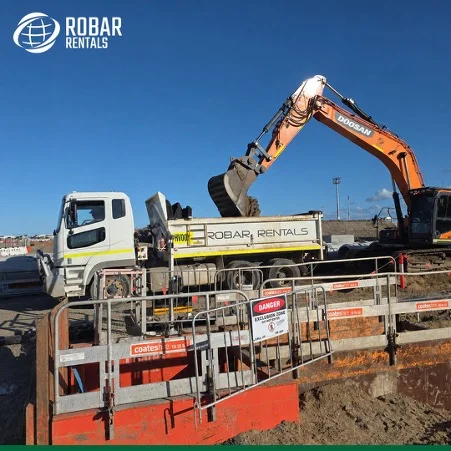
ROBAR Rentals operates in environments where civil and infrastructure projects depend on the continuous availability of plant and equipment. As projects reach their peak construction phases, demand for machinery increases significantly across multiple work fronts simultaneously.
During these critical stages, it’s not just equipment availability that matters; the timing, condition, and suitability of the plant delivered to the site are equally important. Even minor delays or mismatches in equipment supply can significantly affect productivity across multiple crews.
When Demand for Plant Outpaces Site Stability
As construction advances, various crews undertake earthworks, drainage, structural work, and service installations, often requiring equipment in overlapping areas at the same time. Shared resources such as excavators, loaders, and trucks must move swiftly between tasks, and if the necessary equipment isn’t available or suitable, productivity across teams can be disrupted.
How Equipment Delays Impact Multiple Work Fronts
Delays in equipment availability can trigger a chain reaction that significantly impacts project timelines, as each construction stage is interdependent. A late machine can disrupt excavation sequencing, affecting crew productivity and logistics.
It is essential not only to have the right machinery but also to leverage advanced technologies such as telematics and data analytics. These tools can optimise machinery configurations in response to real-time site conditions, improving efficiency. Predictive maintenance can also help minimise unexpected breakdowns. By aligning machine capabilities with actual site demands, professionals can reduce inefficiencies and create a smoother workflow.
The Role of Coordination in Maintaining Flow
Effective plant management depends on real-time visibility into on-site work progress. Equipment must align with scheduled tasks and adapt to changing conditions. This requires anticipating when work fronts will open and adjusting resources accordingly. As project complexity increases, seamless equipment movement between tasks becomes crucial. When plant resources are available and well-timed, crews can progress steadily; misalignment can lead to fragmented work across areas.
Supporting Consistent Project Delivery
Plant availability is not just a logistical consideration; it directly affects how efficiently civil works can be delivered on site.
Projects that align equipment supply with construction sequencing are better placed to sustain productivity during peak delivery phases.
Maintaining this alignment is essential to keeping multiple work fronts active without unnecessary disruption.